Egusi, Ogbono, Afang: Nigerian Soups Explained
From egusi to afang, Nigerian soups carry the story of our regions in every pot. Here is how to tell them apart and order the right one with the right swallow.
If you have ever stood in front of a buka menu board scratching your head over whether to pick egusi or ogbono, you are not alone. Nigerian soups are one of the richest parts of our food culture, and each one tells a story about where it comes from, what grows there, and how families have cooked for generations. Whether you are a student in Nsukka trying to recreate your mother's kitchen from memory, or a Lagos worker ordering lunch between meetings, understanding our soups makes every meal more enjoyable. This guide breaks down the major Nigerian soups, where they come from, what goes into them, which swallow they pair best with, and how to order them like someone who actually knows what they are doing.
Egusi Soup: The Nationwide Favourite
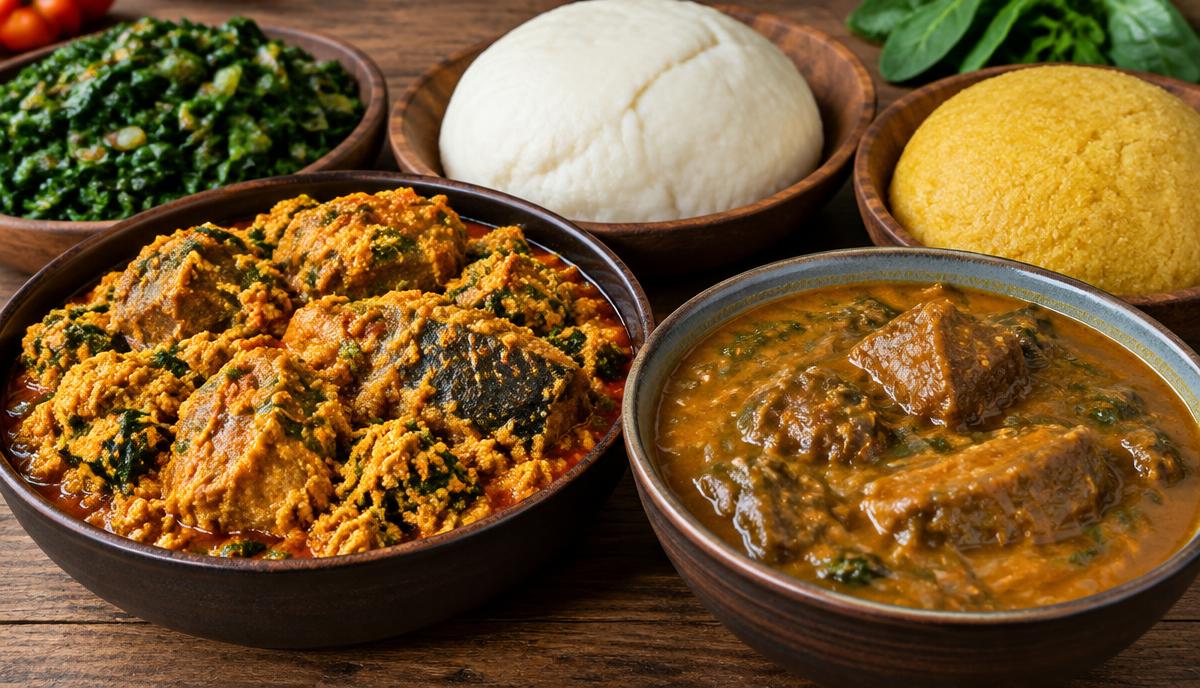
Egusi is perhaps the most widely eaten soup across Nigeria, and for good reason. Made from ground melon seeds, egusi soup is thick, hearty, and endlessly adaptable. Every region and even every household has its own version, from the Yoruba style cooked with locust beans and assorted meat, to the Igbo version loaded with ugu leaves and stockfish, to northern variations that lean on dried fish and less spice.
The base ingredients typically include ground egusi seeds, palm oil, crayfish, pepper, onions, and a protein combination that can range from goat meat and cow skin to smoked fish and dried fish. Some vendors fry the egusi first to give it that lumpy, textured look, while others prefer a smoother, more spread-out consistency.
Egusi pairs beautifully with pounded yam, eba, semovita, or fufu. If you are ordering from a vendor on ChowConnect, pounded yam is the classic match, but eba is the more affordable and equally satisfying option for a student budget. Expect to pay anywhere from 1,500 naira to 3,500 naira depending on the protein you add and whether you are in a campus buka or a proper restaurant.
Ogbono Soup: The Draw Soup Everyone Loves
Ogbono soup gets its distinctive stretchy, mucilaginous texture from ground ogbono seeds, also called African bush mango seeds. This soup is beloved across the south east and south south, though it has fans everywhere in the country now. The draw texture is exactly what many people crave, and it is often mixed with a little okra to intensify that pull.
Ogbono is usually cooked with palm oil, crayfish, pepper, and a mix of proteins such as beef, goat meat, dried fish, and sometimes periwinkle for coastal versions. Ugu leaves are a common addition for extra nutrition and colour.
The best swallow for ogbono is garri or fufu, since the stretchy texture works wonderfully when scooped with a soft swallow that can hold the draw together. Pounded yam also works but some people find the double stretchiness a bit much. When ordering, ask your vendor if their ogbono is "well drawn" if you want that classic stringy texture that Nigerians love to show off in videos.
Afang Soup: The Calabar and Akwa Ibom Classic
Afang soup comes from the Efik and Ibibio people of Calabar and Akwa Ibom, and it is one of the most nutrient dense soups in the country. It is made from afang leaves, which are shredded and combined with waterleaf, giving the soup its signature green, slightly slippery texture.
A proper afang soup is loaded with proteins, often including beef, goat meat, dried fish, periwinkle, and stockfish, all simmered in palm oil with crayfish and pepper. This is not a soup for the faint hearted budget, since the ingredients are many, but it is worth every naira for the taste.
Afang pairs best with fufu or pounded yam. In Calabar and Uyo, you will find it served generously at family gatherings and in restaurants that specialise in south south delicacies. If you are trying afang for the first time through a vendor on ChowConnect, order a small portion first since the richness can be surprising if you are used to lighter soups.
Edikang Ikong: The Vegetable Powerhouse
Closely related to afang in origin, edikang ikong is another Calabar and Akwa Ibom specialty, made primarily from ugu leaves and waterleaf. Unlike afang, it does not use the shredded afang leaf, giving it a slightly different texture and a more vegetable forward taste.
This soup is famous for how much vegetable and protein it packs in. A well made edikang ikong will have generous amounts of meat, fish, and vegetables, cooked with palm oil until everything melds together. It is often considered one of the healthiest Nigerian soups because of the sheer vegetable content.
Fufu and pounded yam are the traditional pairings, though garri works fine too. If you see edikang ikong on a vendor's menu, know that you are getting one of the more premium and labour intensive soups, so pricing tends to be higher than egusi or okra soup.
Okra Soup: Quick, Light, and Popular Everywhere
Okra soup is loved across Nigeria for being quick to prepare and lighter than some of the heavier soups. Made from chopped or grated okra, it can be cooked thick or slightly watery depending on regional preference. Yoruba style okra soup tends to be thinner and eaten with eba or amala, while other regions prefer it thicker.
Okra soup often combines well with other soups, and many vendors serve what is called "okro and egusi" mixed together, or okra layered with ogbono for a combination texture. The proteins used are similar to other soups, including fish, meat, and crayfish.
Because it cooks fast and uses fewer expensive ingredients, okra soup is often one of the more affordable options on a buka menu, making it a good choice for students watching their pocket.
Banga Soup: The Palm Fruit Delight of the Niger Delta
Banga soup, made from palm fruit extract, is a signature dish of the Niger Delta region, particularly among the Urhobo, Itsekiri, and Ijaw people. It has a rich, slightly nutty flavour that comes from the palm fruit itself rather than added palm oil, and it is typically spiced with banga spice, a unique blend that gives it a distinctive aroma.
Fish, particularly fresh catfish or dried fish, is the classic protein for banga soup, though beef and other meats appear too. The soup is often cooked with scent leaf or oburunbebe stick for added flavour.
Banga soup pairs traditionally with starch, a smooth, glossy swallow made from cassava starch, though it also works well with pounded yam or garri. If you find a vendor who makes authentic banga soup on ChowConnect, it is worth trying at least once for the unique taste that you will not find in every kitchen.
Nsala Soup: The Peppery White Soup
Nsala, also called white soup, comes from the Igbo speaking areas of the south east, particularly Delta and Anambra. Unlike most Nigerian soups, it does not use palm oil, giving it a lighter, almost clear appearance with a peppery kick.
The soup is traditionally made with fresh fish, particularly catfish, along with yam as a thickener, uziza leaves, and utazi for that slightly bitter finishing note. It is often prepared for new mothers and considered a healing food because of its light, easily digestible nature.
Nsala pairs excellently with pounded yam or fufu. Because fresh fish is central to the dish, quality nsala can be pricier, but it is a favourite for special occasions and celebrations.
How to Order Nigerian Soups on ChowConnect
Ordering soup online or through an app works best when you know a few basics. Always check whether the price listed includes the swallow or if it is sold separately, since many vendors price them apart. Specify your preferred protein combination if the vendor allows customisation, since some soups come with a default protein that you might want to swap.
- Ask about spice level, since pepper tolerance varies a lot between vendors and regions
- Confirm if extra swallow portions cost more, since students often need larger swallow servings
- Check delivery time carefully, since soups with draw texture like ogbono do not always travel well over long distances
- Look at vendor reviews for soup specific comments, since a vendor might be excellent at jollof but average at egusi
Bringing It All Together
Nigerian soups are more than just food, they are a map of our regions, our seasons, and our family traditions. From the nationwide love of egusi to the coastal richness of banga and afang, every pot tells a story worth tasting. Whether you are craving something familiar from home or want to try a soup from a different part of the country for the first time, there is a vendor near you ready to serve it hot and fresh.
Browse the soup and swallow listings on ChowConnect today, filter by your campus or neighbourhood, and place your order from a vendor who knows exactly how to make your favourite pot sing. If you run a kitchen that specialises in any of these soups, sign up as a vendor on ChowConnect and let more people discover your cooking.